

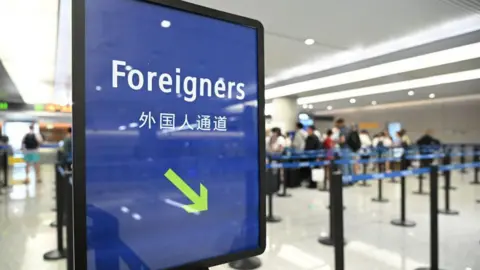
Originally revealed in August, the novel visa program focusing on international science specialists got minimal widespread notice.
Nevertheless the K visa, which took effect this mid-week, abruptly attracted substantial focus after described as the US H-1B system by overseas news outlets.
The analogy ignited extensive anxiety among local the public, with many doubting whether benefits given to foreigners would increase rivalry in an presently slow job market.
"We have numerous undergraduate holders, including additional with postgraduate and PhD qualifications. Currently exists a excess of domestic talent - and now you're bringing in foreign university alumni?"
"We've seen so many recent schemes urging our college students to compete with each other, but in the end, everything pales beside a overseas citizenship," a different online commenter commented.

Additional commenters expressed questions about whether officials could recruit top-tier talent and whether foreigners would adapt to life in mainland China, citing linguistic challenges and the nation's closely monitored political framework.
The opposition turned out so vehement that government-affiliated media publications have become involved to seek to reassure the situation.
Recently, multiple official publications issued articles supporting the scheme as an opportunity "for the world to observe a increasingly accessible and self-assured country in its new era."
What is the new entry program?
Although full specifications continue to be unclear, the Chinese government has clarified that the scheme targets experts working in technical and scientific areas.
The government have described it as a visa for "exchanges concerning academics, scientific inquiry and innovation, cultural activities, as well as startup development and economic activities."
According to official materials, applicants for the K visa should be those "who have graduated from prestigious universities or research organizations in China or internationally with a undergraduate or postgraduate credential in a technical or scientific field."
Significantly, foreign specialists will not require sponsorship from a local employer to be granted the permit - and will benefit from more flexibility in terms of the multiple entries, validity period and period of residence.
Government-affiliated publications, while attempting to alleviate general concern, have stopped short of clarifying the precise range of activities the program covers, leaving unanswered the real issue that is undoubtedly on the thoughts of many - does it permit suitable foreigners to work in the country?
Via current articles, government-affiliated publications have emphasized that the K visa would differs from the identical with an US work visa, indicating that it was "not merely a work permit."
This initiative forms just the most recent move in the nation's wider campaign to attract foreigners to the territory - whether for tourism, research or economic endeavors.
The nation's ambitions and constraints
Obviously is that China is capturing the chance as the United States pulls back from its status as a top choice for worldwide experts and travelers.
The official launch of the entry scheme - though the date was determined two months ago - aligns with recent modifications to American immigration rules, a move that has sparked debate in countries that are significant sources of skilled employees to the America.
Beginning in mid-year, the country had visa-free treaties with seventy-five countries to make visiting the country simpler for international visitors.
"At a time when some states are becoming isolationist and limiting international professionals, China has shrewdly seized this significant moment and quickly launched appropriate initiatives," a state-run commentary states.
Nevertheless the program is has its limitations, analysts note.
The internet criticism illustrates a tendency of general review and objection in the country over what is perceived as preferential treatment for overseas persons, per sector observers.
Linguistic forms another challenge. Numerous scholars and academics who have relocated to the nation in recent years are with Chinese heritage and {fluent|proficient|


